
People
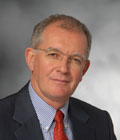
- More than 35 years’ experience in industry and consultancy in Europe, the USA, Asia and Latin America
- Worked on complex and sometimes controversial issues for business and in litigation
- Experienced in developing and implementing advocacy strategies at the interface between business and policy, politics and the media
- Widely recognised for his strategic and innovative approaches, his networks and his ability to change outcomes
- Worked on a number of very large assignments in the fields of legislation, Better Regulation and M&A
Joseph Huggard is a chemical engineer with over 35 years’ experience gained across a wide range of businesses both in operations and consulting. He began his career working in manufacturing and plant design/construction for Exxon Chemicals and GlaxoSmithKline. Moving into consultancy, he is credited with developing the projects on which the ISO 14000 and EMAS environmental management systems are based.
He has extensive business, science and policy experience in Europe, the United States, Asia and Latin America. He understands the workings of the key European Institutions as these impact on business. He has designed and implemented numerous business defence strategies for major international industries and is pre-eminent in assembling expert panels to assist clients.
He has also organized landmark conferences on Better Regulation, RIA (regulatory impact analysis) and conflict of interest and bias in the EU and Latin America.
Mr. Huggard has worked extensively in the field of RIA and the application of econometric modelling to predict likely the short- and medium-term impacts of potential regulatory decisions on business sectors and how these create societal consequences.
He has provided research and advice in relation to M&As.
He also works on the interaction between science and public policy and the challenges that these interactions pose for industry communications both in the traditional media and the infosphere. He gives workshops, presentations and seminars on how industry should address these issues.
He holds a degree in Chemical Engineering and is a former adjunct professor at the Sacred Heart University Luxembourg Campus of the John F. Welsh College of Business MBA course where he taught ethics, leadership and contemporary management.
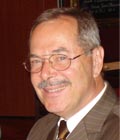
- Former Secretary General of the European Association of Research and Technology Organisations (EARTO) in Brussels
- Former member of numerous scientific committees
- Former professor at University of Xiamen (China) and adjunct at university in Kassel (Germany)
- Sworn in expert for environmental analytics and scientific editor of the Fresenius Environmental Bulletin
- Currently Secretary General of the advisory board (European Advisory Committee) to the Fujian Association for the Promotion of International Economic and Technological Cooperation (FAPET)/China
- Excellent links to European Commission, Parliament and national governments
- Long experience in consulting in scientific affairs, product defence and sustainability
- Preeminent in the engagement of key experts across a broad range of scientific issues
Dr. Schlesing has a Ph.D. in Analytical Chemistry (University of Bonn). He is author and co-author of many scientific and policy publications including co-author of “Responsible Partnering” between Research and Business.
He is fluent in German, English, French, and Italian.

- 35 years experience in biological, chemical and social-policy aspects of environmental and public health protection in the United States and Europe
- Served on two national Academy Science Committees, numerous USFDA and USEPA peer review panels and chaired several US Army Science Advisory Board Committees
- Executive director of the Presidential/Congressional Commission on Risk Assessment and Risk Management
- Former director of the Toxicology and Risk Assessment Program at the National Academy of Sciences/National Research Council
- Serves on the National Academy of Sciences Board on Environmental Studies and Toxicology
- Lifetime fellow and past president of the Society for Risk Analysis
- PhD in toxicology from MIT
Dr. Gail Charnley is an internationally recognized scientist specializing in environmental health risk assessment and risk management science and policy. She has 30 years of experience in the biological, chemical, and social policy aspects of environmental and public health protection, writing and speaking extensively on issues related to the roles of science and democracy in environmental and public health decision-making. Dr. Charnley focuses on the strategic risk management of complex scientific issues related to, for example, the design and implementation of regulatory programs in the United States and Europe, and on promoting a role for science and analysis in regulatory agendas worldwide.
She recently served on two National Academy of Sciences committees, one convened to improve the regulation of low-level nuclear waste disposal and one convened to provide guidance to the US Environmental Protection Agency on the future of toxicity testing and risk analysis. She has also served on and chaired several US Army Science Advisory Board committees that evaluated science- and technology-based policies and practices in the Army and on numerous peer review panels convened by the Environmental Protection Agency, the Food and Drug Administration, and Health and Welfare Canada.
From 1994-1997 she was executive director of the Presidential/Congressional Commission on Risk Assessment and Risk Management, mandated by Congress to evaluate the roles that risk assessment and risk management play in federal regulatory programs. Before her appointment to the Commission, she served as director of the Toxicology and Risk Assessment Program at the National Academy of Sciences/National Research Council, where she also served as the project director for several Academy committees convened to evaluate and make recommendations concerning science-based public policy matters.
She lectures frequently on science policy issues and is the author of numerous reports evaluating the toxicity of chemical exposures, environmentally related impacts on public health, the management of risks to health and the environment, children’s environmental health, and democratic science-based public policy and decision-making. She is a lifetime fellow and a past president of the international Society for Risk Analysis, for which she has also served as councillor, Sigma Xi distinguished lecturer, and chair of the public policy committee. She holds an AB in biochemistry from Wellesley College and a PhD in toxicology from MIT.

- 35 years international experience in industry and consulting on the impact of public policy on business performance
- Focus on competitiveness, innovation and entrepreneurship, and Regulatory Impact Analysis
- Worked for pharmaceuticals, specialty chemicals, consumer products, oil refining, telecoms, retailing, biotechnology and metals industries, the OECD, European Commission, national governments
- Held senior management positions at BP in Finance, Corporate Planning, and Marketing, including Finance Director and Deputy Managing Director responsible for BP’s extensive investments in Switzerland
- Graduate in Modern History from Oxford University and a Fellow of the Association of Chartered Certified Accountants (FCCA)
- Clients include the OECD, the European Commission, national governments, trade associations, the European Roundtable of Industrialists, UNICE, and a wide range of major international corporations
At BDL, Richard Meads has, for the past 20 years, undertaken significant work in the area of socio-economic impact analysis in a wide range of sectors including pharmaceuticals, specialty chemicals, consumer products, oil refining, telecoms, retailing, biotechnology and metals. Amongst the assignments he has recently completed is a global benchmarking study for the animal health sector, which examined the socio-economic impact of the industry, as well as the impact of government policy on competitiveness. It was carried out in Australia, Canada, Europe, Japan, and the USA. He has also worked widely on other themes including competitiveness, innovation and entrepreneurship, and Regulatory Impact Analysis.
He has carried out business critical studies for the mining and metal industries related to multi-billion-dollar acquisitions. His work has formed the basis for numerous industry initiatives to communicate to key stakeholders the economic and societal benefits that their products and services deliver.
Before to founding BDL, Richard Meads spent twelve years working for British Petroleum. He held senior management positions in Finance, Corporate Planning, and Marketing, including Finance Director and Deputy Managing Director responsible for BP’s extensive investments in Switzerland.
Richard Meads was a Senior Policy Advisor to The European Policy Centre and Rapporteur of its Risk Forum between 2004 and 2007. He was now a founding member of the European Risk and Innovation Forum; an EU-level think tank focused on regulatory policy, management of risk, and regulatory reform. He has written extensively on regulatory policy and risk management.
He is a graduate in Modern History from Oxford University and is also a Fellow of the Association of Chartered Certified Accountants (FCCA).
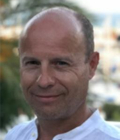
- 30 years international experience in business and consulting and managing major communications campaigns.
- A career spanning roles such as Director at Weller Consulting, Director of Communication at the International Fragrance Association, Communication Manager at CropLife International and the European Aluminium Association
- Specialising in policy development, media relations, stakeholder engagement, and change management
- Significant contributions to the creation of EU legislative frameworks, international scientific platforms, and industry guidelines
- Ability to navigate complex challenges and deliver results
- Dedicated to excellence, his ability to connect with diverse audiences and lead with impact has been demonstrated in his collaboration with organisations such as Copa-Cogeca, Cefic, Roche Diagnostics, and GSK Vaccines.
Stephen's achievements, expertise, and contributions to the fields of communication and public affairs serve as a testament to his commitment to driving innovation, fostering partnerships, and delivering strategic solutions in a dynamic global landscape.
A graduate in Public Relations from Bournemouth University, he is multilingual and based in Brussels.